


How to Start an IT Company in Nepal: A Step-by-Step Guide
Starting an IT company in Nepal can be an exciting opportunity for entrepreneurs who want to build a software development firm, web design agency, web hosting business, digital marketing company, or technology startup. As businesses increasingly adopt digital tools, demand for websites, software, cloud infrastructure, and IT services continues to create opportunities in the domestic and international markets.
However, starting an IT company involves more than having technical skills and registering a business. You need a clear business model, the right legal structure, proper documentation, tax registration, reliable infrastructure, and a plan to attract customers.
This guide explains how to start an IT company in Nepal, from choosing your services to registering the business and building its online presence.
1. Choose Your IT Business Model
Before registering your company, decide what services you want to provide. The IT industry includes several business opportunities, and your choice will determine the skills, equipment, investment, and employees you need.
- Software development: Build websites, mobile applications, business software, and custom digital solutions.
- Web development and design: Create websites, e-commerce stores, and web applications for businesses.
- Web hosting and cloud services: Provide shared hosting, VPS, dedicated servers, domain registration, and cloud solutions.
- Digital marketing: Offer SEO, social media management, content marketing, and online advertising.
- IT outsourcing: Provide programming, technical support, design, and development services to international clients.
- IT consultancy: Help organizations select, implement, and manage technology systems.
Starting with a focused service offering is usually more practical than trying to provide every IT service immediately. You can expand as your customer base and team grow.
2. Choose the Right Business Structure
Your legal structure affects ownership, liability, compliance, and future expansion. In Nepal, entrepreneurs may consider a private limited company, a sole proprietorship or private firm, or a partnership firm, depending on their business model and ownership arrangements.
| Business structure | Suitable for | Main advantages | Important considerations |
|---|---|---|---|
| Private Limited Company | Growing IT companies and startups | Separate legal entity, structured ownership, limited liability for shareholders | Corporate filings and ongoing compliance |
| Sole Proprietorship / Private Firm | Individual freelancers and small service businesses | Individual ownership and relatively simple administration | Owner generally carries personal business liability |
| Partnership Firm | Small businesses with multiple owners | Shared investment, skills, and responsibilities | Partners' liability and responsibilities depend on the applicable legal structure |
A private limited company is worth considering if you plan to hire employees, work with larger corporate customers, bring in investors, or build a business that can expand over time. The Investment Board Nepal's Investment Guide explains the company registration framework and private company structure.
3. Select and Reserve Your Company Name
Choose a professional, memorable name that represents your IT business. Before finalizing it, check whether the name is available through the Office of the Company Registrar (OCR).
For a private limited company, the general process is to create an account on the OCR online system, submit a proposed company name, and wait for approval before proceeding with incorporation.
Also check whether a suitable domain name is available. Your company name, website domain, and branding should ideally be consistent. Before investing in a brand, check for possible trademark conflicts as well.
4. Prepare the Required Legal Documents
For a private limited company, two important incorporation documents are the Memorandum of Association (MOA) and Articles of Association (AOA).
The MOA generally describes the company's objectives, capital, and legal identity. The AOA establishes internal rules concerning company management, shareholders, meetings, and other corporate matters.
Other documents and information may include:
- Citizenship documents of Nepali founders or shareholders.
- Registered office address and supporting details.
- Shareholder and director information.
- Proposed authorized and issued capital details.
- Required company incorporation forms and declarations.
- Foreign investment approval documents, if applicable.
Make sure the company's objectives accurately cover the services you intend to provide, such as software development, web development, IT consultancy, hosting, or digital solutions, where legally permitted. Professional legal assistance can help avoid mistakes in the incorporation documents.
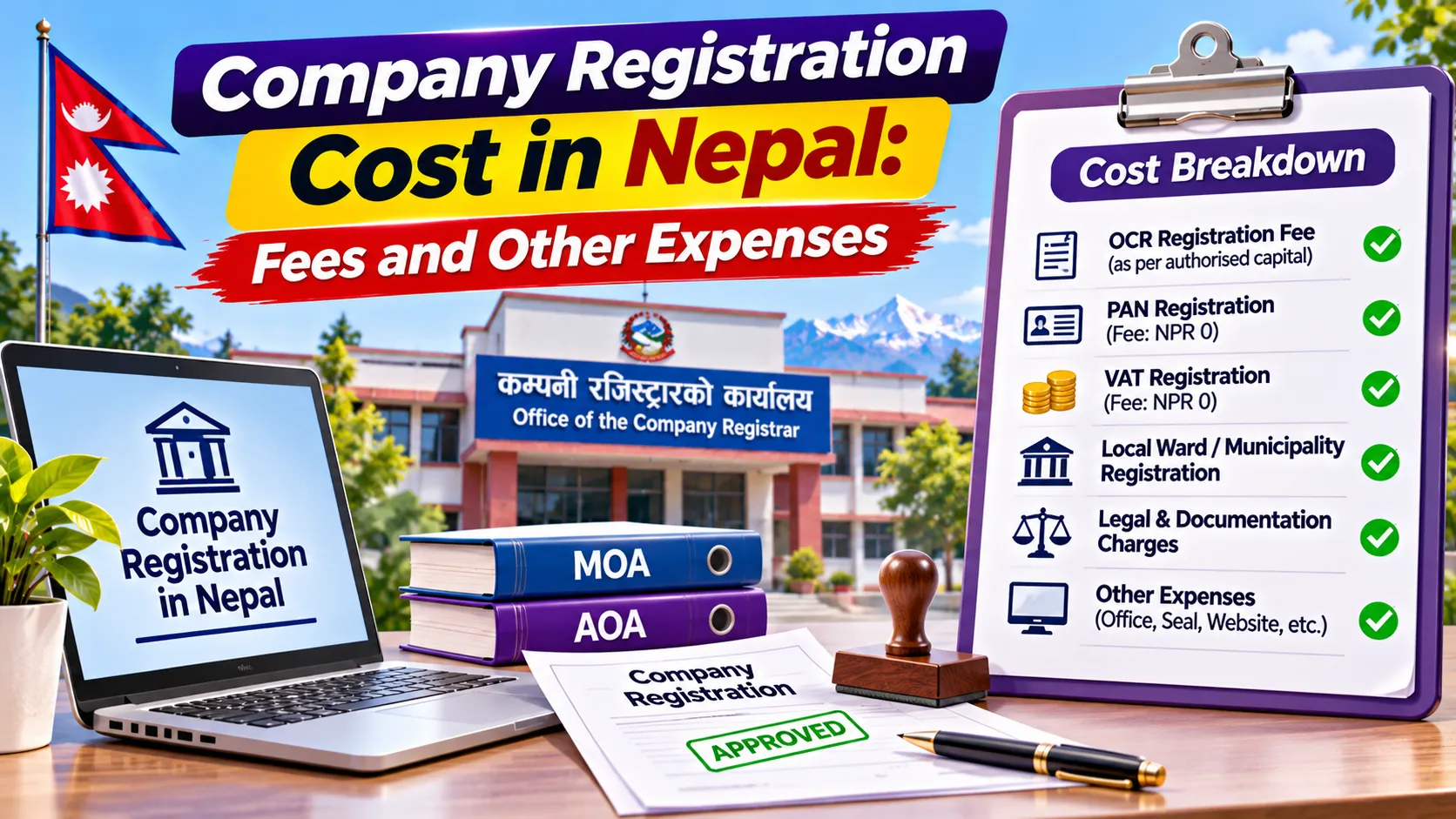
5. Register Your Company With the OCR
Submit the incorporation application and required documents through the Office of the Company Registrar. The registrar reviews the application and may request corrections or additional information.
After approval and payment of the applicable registration fee, the company receives its Certificate of Incorporation. Registration fees depend on the authorized capital and the applicable government fee schedule. Always check the current OCR schedule rather than relying on outdated fee estimates.
Official website: Office of the Company Registrar.
6. Obtain PAN and Understand Your Tax Obligations
After incorporation, arrange tax registration with Nepal's Inland Revenue Department (IRD). A Permanent Account Number (PAN) is important for business transactions, invoicing, accounting, and tax compliance.
Depending on your services, turnover, and applicable rules, VAT registration may also be required. Do not assume that every IT service has identical tax treatment. Domestic software services, exported digital services, consulting, and other transactions may have different implications.
Maintain proper records of sales, expenses, invoices, salaries, and payments from the beginning. Consult the IRD or a qualified tax professional to determine the requirements for your specific business.
Official website: Inland Revenue Department.
7. Check Industry and Local Registration Requirements
Depending on the company's activities, location, and legal structure, additional registration or local approvals may apply. Check with the relevant local authority and the Department of Industry whether your particular IT activities require industry registration or other approvals.
Businesses involving regulated activities such as telecommunications, financial services, payment systems, or certain data-related services may face additional requirements. Ordinary software development and website design should not automatically be treated as regulated financial or telecommunications activities.
For foreign investment, the process is different. The Department of Industry explains the foreign investment approval process under the Foreign Investment and Technology Transfer Act and related industrial legislation. Obtain the required approval before proceeding with foreign investment transactions.
8. Open a Business Bank Account
A dedicated business bank account helps separate company money from personal finances. Banks generally request company incorporation documents, tax registration details, company decisions, and identification documents of authorized representatives.
Use the account to receive customer payments, pay employees, purchase equipment, and manage operating expenses. If you plan to serve international customers, ask your bank about permitted foreign-currency transactions, export-service documentation, and applicable foreign exchange procedures.
9. Set Up Your Website, Domain, Hosting, and Business Email
An IT company needs a professional online presence. Start by registering a domain that matches your business name and creating a website that explains your services, portfolio, contact details, and company background.
You can explore domain registration services in Nepal when choosing a suitable domain for your company. A domain is your business's online identity, so choose one that is easy to remember and appropriate for your target market.
Next, select suitable web hosting in Nepal for your company website. A small business website may work well on shared hosting, while a larger application or resource-intensive platform may require a different infrastructure plan.
Professional communication also matters. Instead of relying only on generic email accounts, consider business email hosting so your team can use addresses such as [email protected] or [email protected].
As your company develops applications, operates SaaS platforms, or manages websites with growing traffic, you may need more control over server resources. In that situation, VPS hosting in Nepal can provide virtual server resources and root access for technical workloads. Businesses that prefer assistance with server administration can also compare managed VPS hosting options.
Choose infrastructure according to your actual technical requirements, expected traffic, security needs, and available budget. A VPS is not necessary for every new company website.
10. Hire the Right Team and Find Customers
Depending on your services, you may need software developers, web designers, system administrators, digital marketers, sales professionals, and customer support staff. At the beginning, a small skilled team can be more practical than hiring too many employees.
To attract customers, create a portfolio that demonstrates your work. Approach local businesses, schools, colleges, startups, and organizations that need technology services. For international clients, build professional profiles, develop partnerships, publish useful technical content, and use appropriate business networks.
Focus on quality, communication, deadlines, and dependable customer support. Repeat customers and referrals can become important sources of long-term revenue.
Final Thoughts
Starting an IT company in Nepal requires more than technical knowledge. You need a clear business model, suitable legal structure, company registration, tax compliance, reliable infrastructure, and a strategy for finding customers.
Start with a focused service offering, understand your legal obligations, and manage your finances carefully. Build your website and professional identity, invest in the right technology, and expand when customer demand justifies it.
With consistent execution and responsible business management, an IT company in Nepal can serve local organizations as well as customers in international markets.
Reliable Sources and Further Reading
- Office of the Company Registrar (OCR) – Company incorporation and registration.
- Investment Board Nepal – Nepal Investment Guide 2024 – Company structures and registration information.
- Inland Revenue Department (IRD) – PAN, VAT, and tax requirements.
- Department of Industry – Foreign Investment in Nepal – Foreign investment approval procedures.
- Nepal Law Commission – Relevant laws and regulations.









Comments
Sign in to leave a comment.
Sign in