

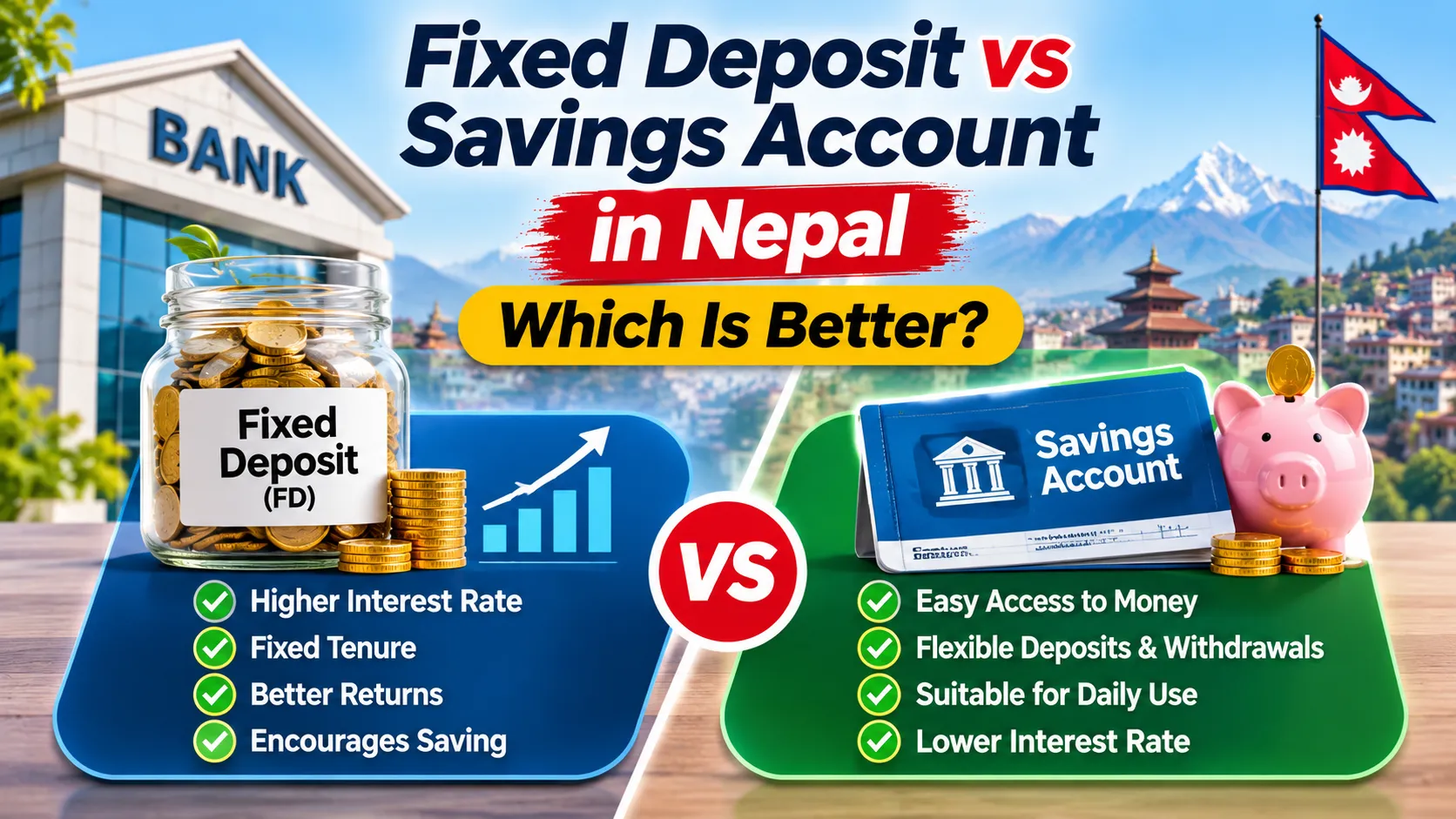
Fixed Deposit vs Savings Account in Nepal: Which Is Better?
Saving money is important, but choosing the right bank account can make a difference in how much interest you earn. In Nepal, savings accounts and fixed deposits (FDs) are two popular ways to keep money in a bank.
Both offer interest, but they serve different purposes. A savings account provides easy access to your money, while a fixed deposit generally offers a higher interest rate in exchange for keeping your money deposited for a specific period.
So, which one is better? Let's compare them.
What Is a Savings Account?
A savings account is a regular bank account where you can deposit money, earn interest, and withdraw funds whenever needed, subject to the bank's terms.
Most banks in Nepal offer savings accounts for students, salaried employees, business owners, and general customers.
Benefits of a savings account:
- Easy access to your money.
- Suitable for daily transactions and payments.
- Earns interest on your balance.
- Useful for emergency savings.
- Supports mobile banking and digital payments.
The main disadvantage is that savings accounts generally offer lower interest rates than fixed deposits.
What Is a Fixed Deposit?
A fixed deposit is an account where you deposit a specific amount for an agreed period, such as six months, one year, or several years.
In return, the bank pays interest according to the agreed rate and conditions.
Benefits of a fixed deposit:
- Generally offers higher interest rates.
- Provides predictable returns when the rate is fixed.
- Encourages disciplined saving.
- Suitable for money you do not need immediately.
However, withdrawing money before maturity may reduce your interest earnings or involve other conditions set by the bank.
Fixed Deposit vs Savings Account: Key Differences
1. Interest Rate
Fixed deposits generally offer higher interest rates than regular savings accounts. The actual rate depends on the bank, deposit duration, and current market conditions.
2. Access to Money
Savings accounts allow you to withdraw money when needed. Fixed deposits are designed for a specific period, so early withdrawal may affect your return.
3. Saving Discipline
A savings account offers flexibility, but easy access can make spending tempting. Fixed deposits encourage you to keep money untouched until maturity.
4. Financial Flexibility
Savings accounts are better for emergency funds and regular expenses. Fixed deposits are more suitable for money you can afford to leave unused.
Example: How Much Interest Can You Earn?
Suppose you deposit Rs. 500,000 for one year.
Using illustrative annual interest rates:
- Savings account at 2.76%: Rs. 13,800 gross interest.
- Fixed deposit at 3%: Rs. 15,000 gross interest.
The fixed deposit earns approximately Rs. 1,200 more before applicable taxes.
These are example rates, not guaranteed current offers. Actual returns depend on the bank's published rates and calculation methods.
Which Option Is Better for You?
The right choice depends on your financial needs.
- Students: A savings account is generally more practical for education and daily expenses.
- Salaried employees: Keep emergency money in savings and consider FDs for additional savings.
- Business owners: Use savings accounts for regular payments and FDs for surplus funds.
- Senior citizens: Fixed deposits may provide predictable interest, while savings accounts offer easy access.
- Future goals: FDs can help organize savings for planned expenses such as education or vehicle purchases.
Can You Use Both?
Yes. You do not have to choose only one.
For example, if you have Rs. 1,000,000, you could keep Rs. 300,000 in a savings account for emergencies and place Rs. 700,000 in fixed deposits.
This approach gives you access to some money while allowing the remaining amount to earn interest.
Before opening an account, compare interest rates, minimum balances, fees, maturity conditions, and bank reliability. Also check whether the institution is licensed by Nepal Rastra Bank and covered by the applicable deposit guarantee scheme.
Final Verdict
A savings account is better for flexibility, daily expenses, and emergency funds. A fixed deposit is generally better for earning higher interest on money you do not need immediately.
For most people in Nepal, using both accounts can be a sensible approach. Keep enough money accessible in savings and place surplus funds in fixed deposits according to your financial goals.
The best choice is not simply the account with the highest interest rate. It is the one that matches your needs and gives you the right balance between returns and accessibility.






Comments
Sign in to leave a comment.
Sign in