
How to Create a Monthly Budget in Nepal: A Step-by-Step Guide with Examples
Managing money can be challenging when your monthly income has to cover rent, groceries, transportation, electricity, education and family responsibilities. Many people in Nepal receive their salary or business income but find that very little remains at the end of the month. Without a proper spending plan, even a reasonable income can become difficult to manage.
Creating a monthly budget is one of the simplest ways to improve your financial management. It helps you understand where your money goes, control unnecessary expenses, prepare for unexpected costs and save towards future goals. You do not need a high income or complicated financial software to get started. You only need to understand your income and plan your spending.
1. Calculate Your Monthly Income
Start by calculating how much money you actually receive every month. If you work in Nepal, use your take-home salary after applicable deductions rather than your gross salary. Consider deductions such as income tax, provident fund or Social Security Fund contributions where applicable.
If you earn money from a business, freelancing, rental income or remittances, include those sources as well. However, irregular income should be estimated carefully. Calculate an average based on previous months instead of planning your regular expenses around an unusually good earning month.
For example, if your monthly salary after deductions is NPR 50,000 and you receive an additional NPR 5,000 from a side business, your total monthly income is NPR 55,000. Knowing your actual income is the first step towards creating a realistic budget.
2. Track Your Monthly Expenses
Before deciding how much to save, understand how much you currently spend. Record your expenses for at least one month. Include large payments such as rent and school fees as well as smaller purchases such as tea, snacks, mobile top-ups and online shopping.
For households in Nepal, common monthly expenses include:
- Housing: Rent, home loan instalments and maintenance.
- Food: Rice, vegetables, groceries, cooking gas and restaurant meals.
- Utilities: Electricity, water, internet and mobile bills.
- Transportation: Public transport, fuel, vehicle maintenance and parking.
- Education and healthcare: School fees, books, medicines and medical expenses.
- Family responsibilities: Support for parents, relatives and household needs.
- Personal spending: Clothing, shopping, entertainment and subscriptions.
- Financial goals: Savings, investments and loan repayments.
You can record these expenses in a notebook or spreadsheet. Reviewing your bank statements and digital wallet transaction histories can also help you identify spending that you might otherwise overlook.
3. Follow a Budgeting Rule That Fits Your Income
The 50/30/20 budgeting rule is a popular starting point. It divides your take-home income into three broad categories:
- 50% for needs: Housing, groceries, utilities, transportation and essential healthcare.
- 30% for wants: Entertainment, shopping, dining out and other non-essential purchases.
- 20% for savings and debt repayment: Emergency savings, investments and additional loan payments.
However, this is a guideline rather than a strict requirement. Someone paying high rent in Kathmandu or supporting a large family may spend more than 50% of their income on necessities. Adjust the percentages according to your actual circumstances instead of forcing your budget to follow a formula.
4. Example of a Monthly Budget in Nepal
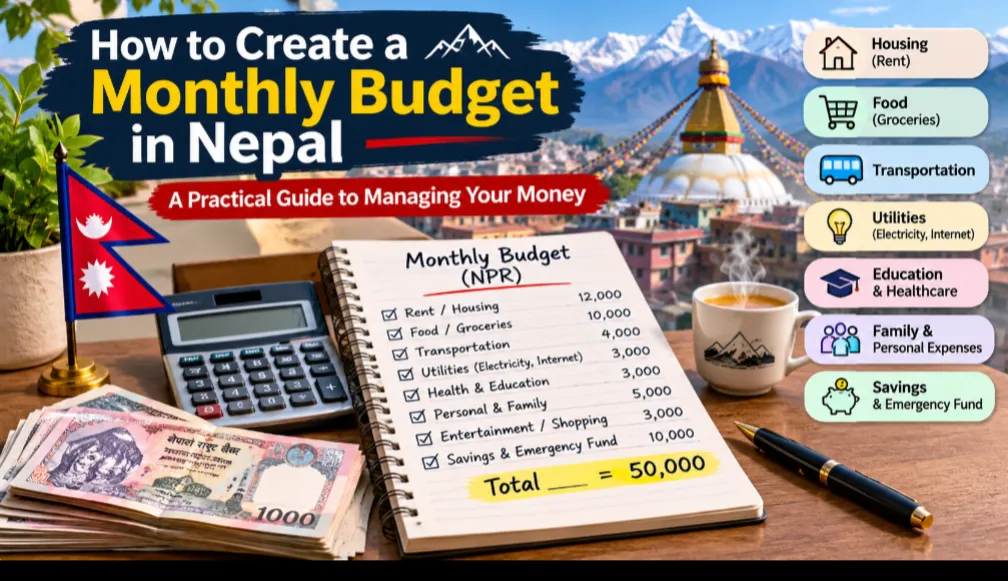
Suppose you receive NPR 50,000 per month after deductions. The following example shows how you could divide that income between household expenses, personal spending and savings.
Illustrative Monthly Budget: NPR 50,000
| Expense Category | Amount (NPR) |
|---|---|
| Housing | 12,000 |
| Food and groceries | 10,000 |
| Transportation | 4,000 |
| Utilities | 3,000 |
| Family and personal | 5,000 |
| Health and education | 3,000 |
| Entertainment and shopping | 3,000 |
| Emergency savings | 5,000 |
| Long-term savings | 5,000 |
| Total | 50,000 |
In this example, NPR 40,000 is allocated to household and personal expenses, while NPR 10,000 is allocated to savings. This means 20% of the monthly income goes towards emergency savings and longer-term financial goals.
Important: These figures are illustrative, not official average household expenses in Nepal. Actual spending will depend on your city, rent, household size, income and financial responsibilities.
5. Build an Emergency Fund
An emergency fund protects you from unexpected financial problems such as medical bills, job loss, vehicle repairs or a sudden reduction in business income. Without savings, you may have to borrow money or use credit to cover these expenses.
Start by saving a manageable amount every month. Your first goal could be NPR 10,000 or NPR 25,000, depending on your income. Gradually work towards saving three to six months of essential living expenses.
For example, if your essential monthly expenses are NPR 25,000, an emergency fund of NPR 75,000 to NPR 150,000 would cover approximately three to six months. Keep this money somewhere accessible, such as a suitable bank savings account, rather than putting all of it into investments that may be difficult to sell quickly.
6. Plan for Festivals and Annual Expenses
Expenses in Nepal can increase significantly during Dashain, Tihar and other festivals. Families may also have annual school fees, insurance premiums, vehicle servicing costs and medical expenses.
Instead of treating every large annual payment as an emergency, estimate the amount in advance and divide it into monthly savings. For example, if you expect to spend NPR 24,000 on an annual expense, setting aside NPR 2,000 every month will help you prepare without putting sudden pressure on your salary.
7. Use Digital Tools to Manage Your Budget
You do not need expensive financial software to manage your money. A simple spreadsheet, budgeting application or notebook can help you record income and expenses.
Mobile banking and digital wallets make payments convenient, but frequent digital transactions can make it harder to notice how much you spend. Review your transaction history regularly and include both cash and digital payments in your budget.
Choose a method that you can maintain consistently. The best budgeting tool is the one you actually use.
8. Review and Adjust Your Budget Every Month
A monthly budget should not remain fixed forever. Your rent may increase, your salary may change or your family may have new financial responsibilities. Review your spending at the end of each month and compare actual expenses with your original plan.
If you regularly spend more than expected on food or transportation, adjust the relevant budget category. If you receive additional income, consider using part of it to increase savings or repay outstanding debt rather than immediately increasing unnecessary spending.
It is also helpful to set one or two specific financial goals. These could include paying off a loan, saving for a vehicle, building an emergency fund or preparing for a major family expense. Clear goals make it easier to stay consistent with your budget.
Conclusion
Creating a monthly budget in Nepal does not require complicated calculations or a high income. It starts with understanding how much you earn, tracking where your money goes and setting realistic spending limits. Even small, consistent savings can help you prepare for emergencies and achieve long-term financial goals.
Start with a simple budget, review it every month and make changes when necessary. A realistic financial plan that you follow consistently is more useful than a perfect-looking budget that you cannot maintain.
References and Further Reading
- Nepal Rastra Bank – Financial literacy and financial education resources.
- National Statistics Office – Nepal Living Standards Survey 2022/23 – Household living standards and expenditure information.
- Nepal Rastra Bank – Financial Literacy Framework 2022.

Comments
Sign in to leave a comment.
Sign in